
ABA parent training is coaching for caregivers so skills a child practices in therapy can also be used at home, during everyday routines. In research, this is often called parent-implemented intervention: a practitioner coaches the family, and the caregiver practices strategies with the child. This guide explains what parent training in ABA is, what published research and clinical guidance say, and how to ask about it in clinic-based Reggio ABA for children ages 1–6.
What is ABA parent training?
The University of North Carolina’s AFIRM program, at the Frank Porter Graham Child Development Institute, describes parent-implemented intervention as parents being coached to use evidence-based strategies with their child during daily routines. In that model, parents are the people who use the strategies with the child, and the practitioner’s role is to train, coach, and share information.
A 2019 BACB clarification of its ABA practice guidelines makes a similar point in clinical terms. Involving family members and other caregivers in planning, and training them to use certain parts of a child’s treatment plan, is important so gains can carry over to other times, people, and places. The same document is clear that family training supports the overall plan; it is not a replacement for treatment delivered by the professional team.
Parents often search for this under names such as ABA parent training or parent training ABA. Those phrases usually refer to the same idea: coaching caregivers so they can support skills outside the therapy session.
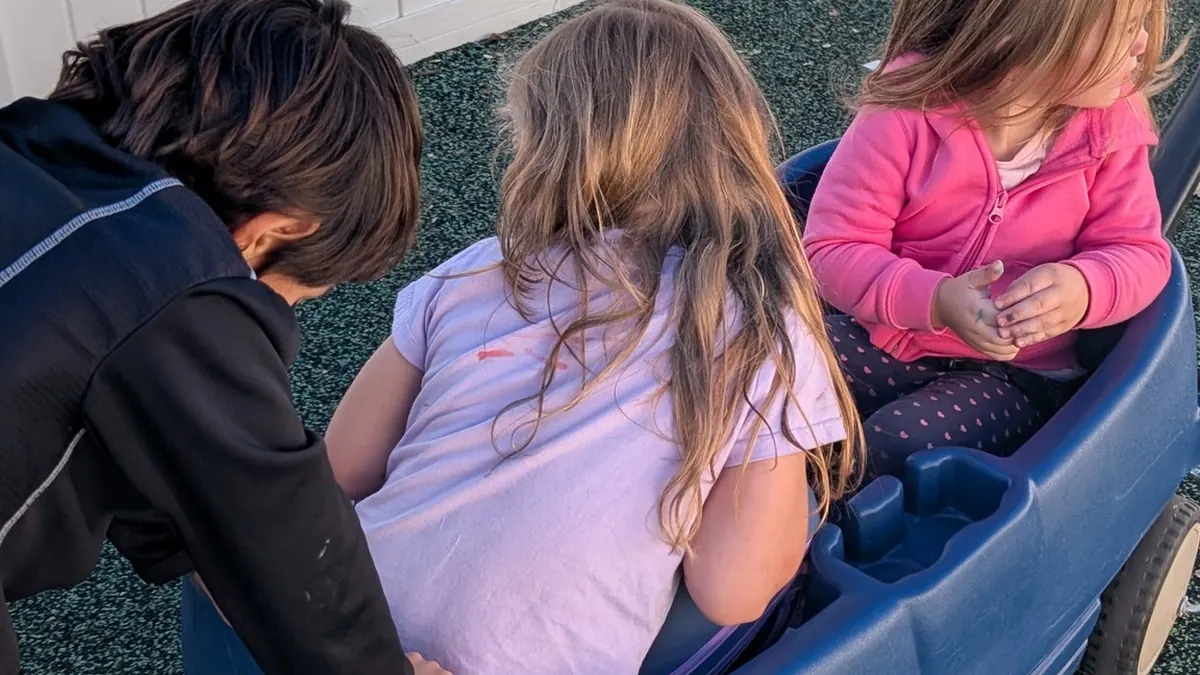
What parent training often includes
AFIRM materials describe a coaching cycle that often includes joint planning, observation, practice with guidance, reflection, and feedback. In joint planning, the coach and caregiver decide what to focus on. The coach may then observe a routine, support the caregiver as they try a strategy, talk through what happened, and offer feedback.
The BACB document cited above says this kind of training should be individualized to the caregivers’ needs, values, priorities, and circumstances. Families differ in work schedules, who lives in the home, the needs of siblings, language, and other resources. Those details should shape the plan. They should not be guessed from a general article.
This is a description of how parent-implemented intervention is often explained in published guidance. It is not a list of what every meeting at every clinic will include. If your child is already in ABA, ask your BCBA how caregiver training is arranged for your family.
What researchers and clinical guidance say
In 2020, the National Clearinghouse on Autism Evidence and Practice (NCAEP), also at UNC’s Frank Porter Graham Child Development Institute, published a systematic review of intervention research. That review by Steinbrenner and colleagues classified parent-implemented intervention as an evidence-based practice, based on 27 single-case design studies and 32 group design studies.
The review included studies with children in age groups that overlap ages 1–6, including birth to age 2 and ages 3–5, as well as older learners. Reported outcome areas included communication, social skills, adaptive or self-help skills, joint attention, and school readiness, among others.
A 2020 clinical report from the American Academy of Pediatrics states that intervention should involve the family, and that there is evidence that training parents to support developmental skill building is helpful. The CDC’s overview of autism treatment also notes approaches in which parents or caregivers take part in intervention.
One peer-reviewed example is a 2015 randomized trial of 180 autistic children ages 3–7, published in JAMA. Over 24 weeks, a parent training program reduced parent-rated disruptive behavior more than a parent education program that shared information about autism but did not teach behavior-management strategies. A clinician who did not know the group assignment also rated a positive response more often in the parent training group. The authors reported that the difference on the parent-rated measures did not meet their prespecified threshold for a minimal clinically important difference, so the practical size of that benefit should be read with care. The study included some children older than 6, and it is not a promise of a specific result for any one family.
Parent training and your child’s ABA sessions
The BACB clarification cited above states that caregiver training should be provided in addition to, not instead of, ABA services delivered directly to the child. Time spent training caregivers should not be subtracted from the hours recommended for the child’s own sessions.
The same guidance also says that, although families should be involved to the extent feasible, a child should not lose medically necessary ABA if caregiver involvement is less than a family hoped for. Authorizations for the child’s services should not depend on a fixed, pre-set amount of parent participation. If you have limits on who can attend or how often, ask your BCBA what participation can look like for your family, and talk with your child’s doctor if you have questions about the overall plan of care.
Parent training at AB Spectrum
At AB Spectrum, family involvement is part of care. The clinic offers parent training and parent coaching, with collaborative planning, so families can use strategies in everyday settings and new skills can carry over at home. Clinic pages describe this as regular caregiver training. A Board Certified Behavior Analyst designs and supervises each clinic-based Reggio ABA plan for children ages 1–6. For the details of your family’s training—including schedule, who attends, and what you will practice—ask your BCBA rather than relying on a general article.
Caregivers may also hear about related teaching methods used in sessions, such as ABA therapy techniques and natural environment teaching (NET). Which methods are in a child’s plan is an individual clinical decision.
Care is clinic-based at five St. Louis-area locations: the Chesterfield ABA clinic, the Florissant ABA clinic, the autism clinic in St. Louis (Mehlville), the St. Peters ABA clinic, and the Wright City ABA clinic.
Families can schedule a Welcome Call to talk with the team. Formal diagnosis is generally required for insurance-covered therapy, and intake verifies benefits. This article is educational. It is not a diagnosis and it is not a promise about any one child.
Frequently asked questions
ABA parent training is coaching for caregivers so skills a child practices in therapy can also be used at home, during everyday routines. In research, this is often called parent-implemented intervention: a practitioner coaches the family, and the caregiver practices strategies with the child.
Parent training ABA is another way people search for the same idea. It means the caregiver is coached to use selected parts of the child’s plan outside the therapy session, so skills can carry over to other times and places. It is not the same thing as a class that only shares general information about autism.
No. BACB guidance states that family training supports the overall treatment plan and is not a replacement for professionally directed treatment. Caregiver training should be in addition to, not instead of, the child’s own ABA sessions.
Training is supposed to be individualized to a family’s circumstances, including work schedules and who can attend. BACB guidance also says a child should not lose medically necessary ABA if caregiver involvement is less than a family hoped for. Ask your BCBA what participation can look like for your family.
No. Published guidance says training should be matched to the caregivers’ needs, values, priorities, and circumstances, and to the child’s plan. Ask your BCBA what your family’s training will include, rather than assuming it will match an example from an article or from another family.
You can start with a Welcome Call to talk with the team. If your child is already in care, ask your BCBA about regular caregiver training and how skills can carry over at home. If you have broader questions about your child’s development, talk with your child’s doctor as well.
Behavior skills training, or BST, is a four-step method for teaching a skill: instruction, modeling, rehearsal, and feedback. The trainer explains the skill, shows it, has the learner practice it, and gives specific praise and correction. In ABA, BCBAs often use BST to train therapists and to coach parents, so strategies stay consistent at home and in the clinic.
Parents can use simple ABA-based strategies at home, like praising a skill right after it happens, using visual schedules, breaking tasks into small steps, and giving clear choices. Consistency matters most. AB Spectrum provides clinic-based ABA, and your child’s BCBA can coach you on strategies that match your child’s goals, so progress carries over to home.
Sources
Amsbary, A., & AFIRM Team. (2025). Parent-Implemented Intervention (PII). The University of North Carolina at Chapel Hill, Frank Porter Graham Child Development Institute, Autism Focused Intervention Resources and Modules.
Amsbary, A., & AFIRM Team. (2025). Parent-Implemented Interventions brief packet. The University of North Carolina at Chapel Hill, Frank Porter Graham Child Development Institute, Autism Focused Intervention Resources and Modules.
Steinbrenner, J. R., Hume, K., Odom, S. L., Morin, K. L., Nowell, S. W., Tomaszewski, B., Szendrey, S., McIntyre, N. S., Yücesoy-Özkan, S., & Savage, M. N. (2020). Evidence-based practices for children, youth, and young adults with autism. The University of North Carolina at Chapel Hill, Frank Porter Graham Child Development Institute, National Clearinghouse on Autism Evidence and Practice Review Team.
Behavior Analyst Certification Board. (2019). Clarifications regarding Applied Behavior Analysis Treatment of Autism Spectrum Disorder: Practice Guidelines for Healthcare Funders and Managers (2nd ed.).
Hyman, S. L., Levy, S. E., & Myers, S. M.; Council on Children With Disabilities, Section on Developmental and Behavioral Pediatrics. (2020). Identification, evaluation, and management of children with autism spectrum disorder. Pediatrics, 145(1), e20193447.
Centers for Disease Control and Prevention. (n.d.). Treatment and intervention for autism spectrum disorder.
Bearss, K., Johnson, C., Smith, T., Lecavalier, L., Swiezy, N., Aman, M., McAdam, D. B., Butter, E., Stillwell, C., Minshawi, N., Sukhodolsky, D. G., Mruzek, D. W., Turner, K., Neal, T., Hallett, V., Mulick, J. A., Green, B., Handen, B., Deng, Y., Dziura, J., & Scahill, L. (2015). Effect of parent training vs parent education on behavioral problems in children with autism spectrum disorder: A randomized clinical trial. JAMA, 313(15), 1524–1533.
If you want to learn how clinic-based Reggio ABA works for children ages 1–6, schedule a Welcome Call. We’re here for you.